All official European Union website addresses are in the europa.eu domain.
See all EU institutions and bodies
An official website of the European Union | How do you know?
Environmental information systems

Forests provide a wide range of products: wood-based products as well as non-wood forest products.
Wood-based products
Forests provide wood products with variable characteristics. Differences in tree species, stem length and diameters, shape and quality make it usable for different purposes to meet a wide variety of human needs, including construction materials, textiles and fibres, paper, chemicals, and energy (heat, electricity, and fuel). The demands for wood-based products and other forest ecosystem services are increasing. It is partly due to changes in the political agendas with objective to develop further the bioeconomy, to meet renewable energy targets and climate mitigation targets. To meet these demands sustainably requires action is required from the sustainable management of forestsand a balancing of the services they provide to the more resource-efficient use of wood in society. Wood can play a vital role in developing the circular and bioeconomy.
The graph below shows the changes in roundwood production since 2010 in the EU27_2020.
478 million cubic metres of round wood (under bark) was produced in the EU27 in 2024. This wood (as well as post-consumer wood, that corresponds to used wood recovered for further use) is used as material and energy in the circular value chains.
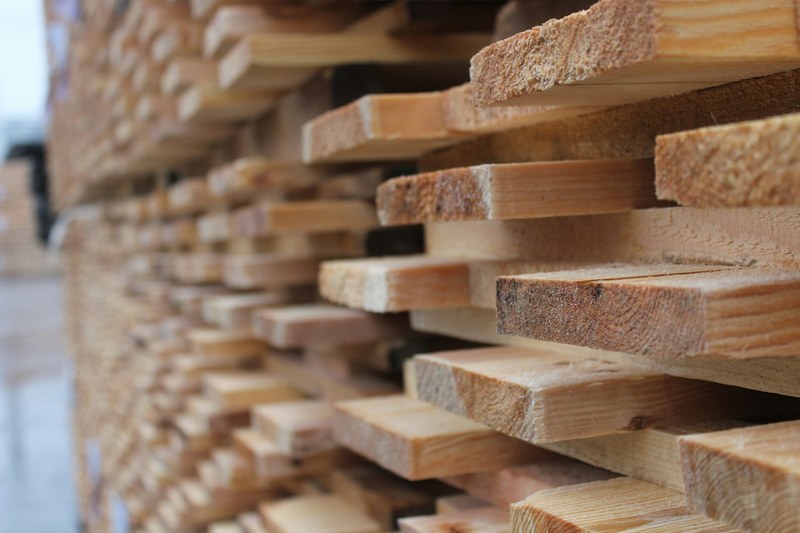
Sawnwood
Produced by cutting logs into planks or beams, it is widely used in construction, furniture, flooring, among others.

Wood Pulp
Produced by processing wood fibers, it is primarily used in papermaking cardboard, hygiene paper products, being also processed into textiles, and other various cellulose-based materials.
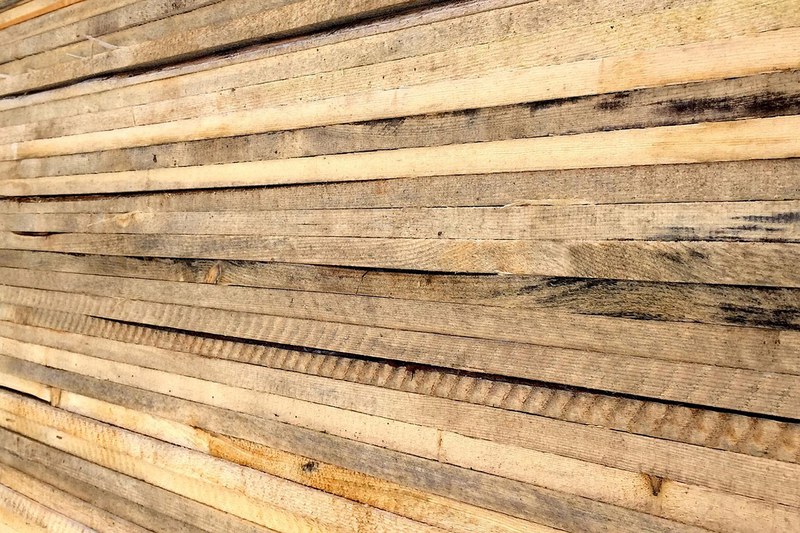
Wood Panels
Manufactured by bonding layers, particles, or fibers of wood together, it is widely used for furniture, interior decoration, flooring, among others.
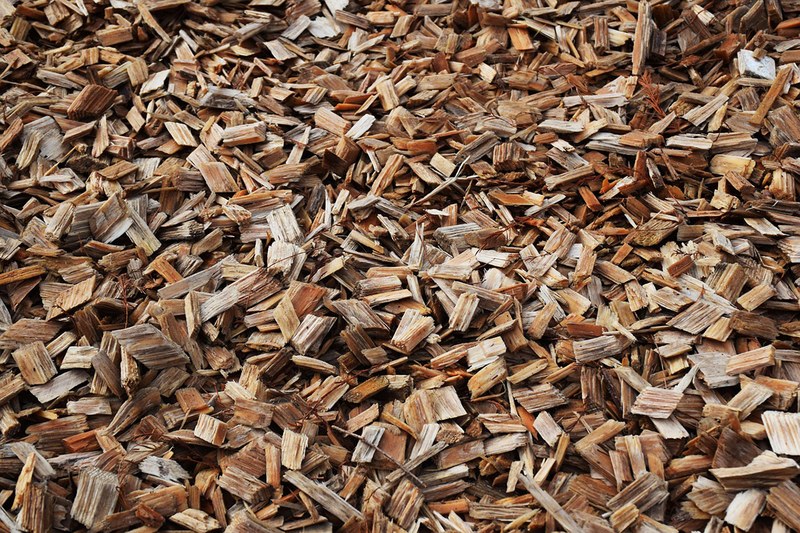
Energy Wood
Derived from logging and wood processing residues, or purpose-grown biomass, it is mainly used for heat and power generation in the form of firewood, wood chips, pellets, and briquettes.
Non-wood forest products
Forests provide a wide variety of non-wood forest products with economic and social importance, such as berries, mushrooms, cork, saps and resins, nuts, honey, and wild meat.
Interestingly, forests can be managed to prioritize different types of non-wood forest products. This can be done through management of hunting and gathering and tree species preferences.
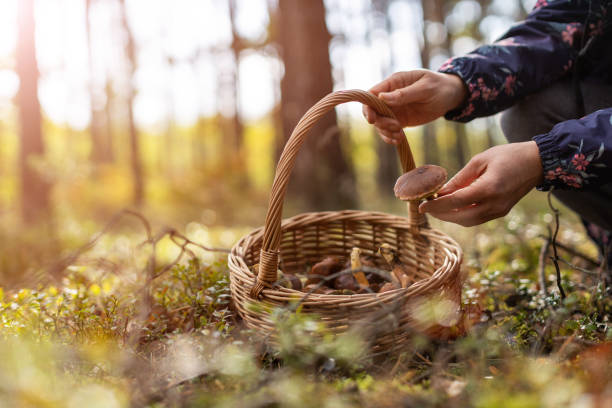
Mushrooms, berries
Foraging of food mushroom species and berries is common in many EU countries.
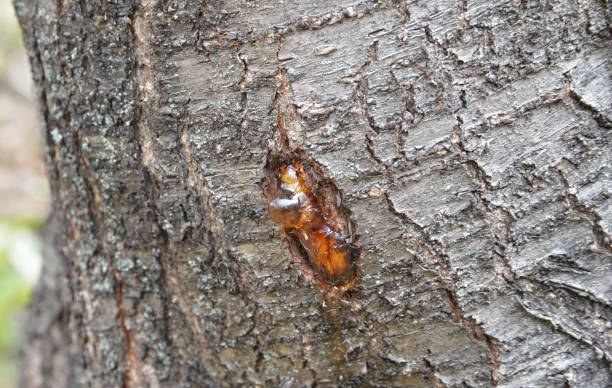
Resin
Production in the EU is limited to the Mediterranean areas.
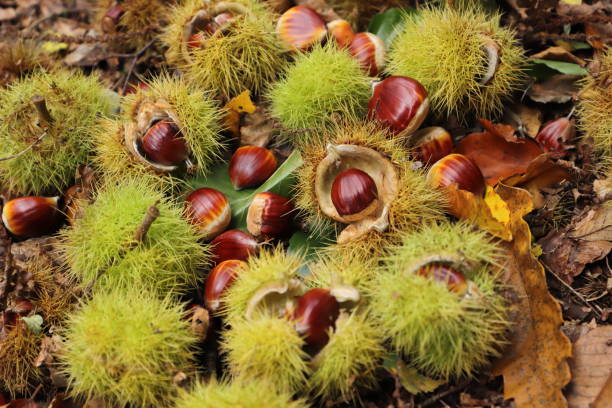
Nuts
Chestnut’s natural distribution covers parts of France, Italy, Spain and Portugal.