All official European Union website addresses are in the europa.eu domain.
See all EU institutions and bodies
An official website of the European Union | How do you know?
Environmental information systems

Forests with high biodiversity, strong connectivity, and a high adaptive capacity of species are more resilient than those without. Resilient forests have the capability to resist, adapt and recover from various biological, ecological and environmental threats. Monitoring forest health using specific indicators helps to inform sustainable forest management practices, thereby promoting resilience.
Main messages

Forests are vulnerable to many threats including fire, drought, pests and diseases - all of which are exacerbated by climate change.

Indicators of forest health are crucial to understanding how to best support forest resilience.

Biodiversity, adaptive capacity of species and connectivity are the main factors for forest resilience and can be improved through adaptive management strategies.
In this section:
Related research highlights
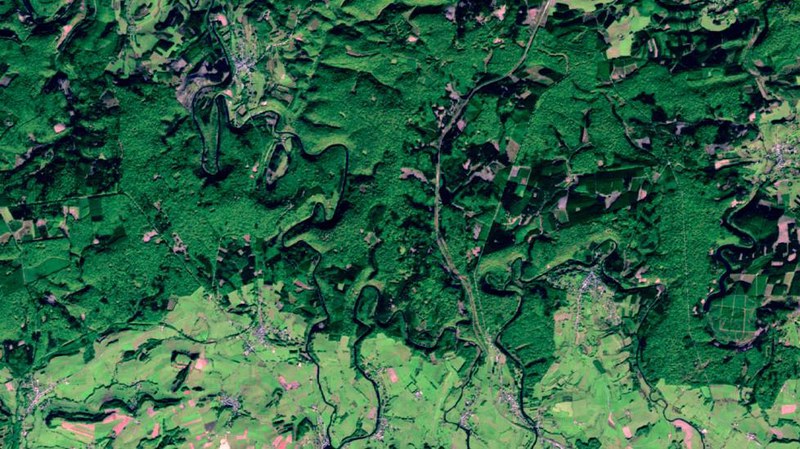
Unlocking the vast potential of remote sensing to monitor forests and forest disturbances
Remote sensing technologies like Sentinel and Landsat satellites provide valuable, large-scale data, complementing traditional methods. However, challenges in data integration and disturbance detection persist, making advanced techniques and combining remote with ground-based methods crucial for effective forest monitoring.

How are droughts impacting Europe's forest biodiversity?
Drought events are becoming longer and more severe in Europe. Alerts over low soil moisture are now being issued also in winter and drought has overtaken wind as the most important disturbance agent on the continent. As a result, the structure and resilience of Europe’s forests are starting to face long-term impacts. In countries like Germany, popular terms such as “Waldsterben 2.0” (forest dieback 2.0) are becoming frequent in the media to describe catastrophic tree mortality levels and secondary results from drought, such as bark beetle outbreaks.
Related policies
EU Biodiversity Strategy for 2030. A long-term plan to protect nature and reverse the degradation of ecosystems for the benefit of people, climate and the planet, which formulates targets for nature protection and habitat restoration.
Nature Restoration Regulation (NRR) aims to restore ecosystems, habitats and species across the EU’s land and sea areas.
EU Forest Strategy for 2030 sets a vision and concrete actions to improve the quantity and quality of EU forests and strengthen their protection, restoration and resilience.
EU Forest Fire Policies sets out guidelines for monitoring and preventing forest fires and restoring burned areas.
Wildfire Action Plan proposes ten actions to improve civil protection against wildfires through improved knowledge on wildfires, improved prevention capacity and increased financing for prevention actions.
Related targets
- The EU Biodiversity Strategy for 2030 invokes the implementation of the EU Invasive Alien Species Regulation, aiming to manage established invasive alien species and decrease the number of Red List species they threaten by 50%. See assessment here.
- As set out in the Farm to Fork Strategy and the EU Biodiversity Strategy, the Commission will take action to reduce the overall use of – and risk from – chemical pesticides by 50% by 2030 and reduce the use of more hazardous pesticides by 50% by 2030. The Commission will also promote the goal of zero pollution from nitrogen and phosphorus flows from fertilisers through reducing nutrient losses by at least 50%, while ensuring that there is no deterioration in soil fertility. See assessment here.
Related resources
European Forest Fire Information system (EFFIS) supports the information services in charge of the protection of forests from fires, in the EU and neighbouring countries.
Invasive Alien Species (IAS ) portal contains information related to the reporting under the EU Regulation 1143/2014 on invasive alien species.
The EASIN - European Alien Species Information Networkfacilitates the exploration of existing Alien Species information from various information sources.
Horizon Europe is the EU’s key funding programme for research and innovation related to forest fires.